Key Takeaways
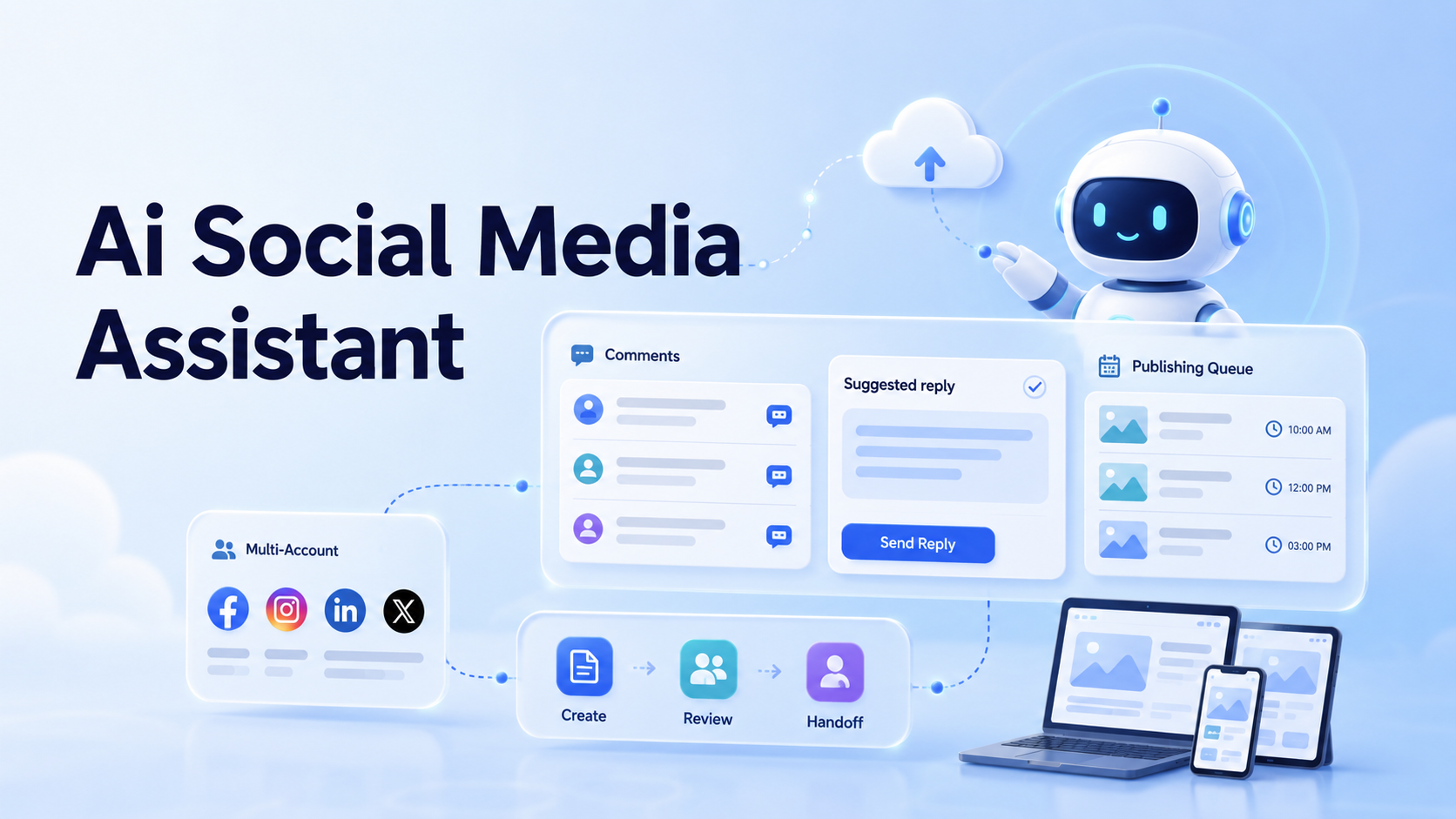
- An AI social media assistant is a workflow layer for repeated publishing and reply work, not only a writing bot.
- The real value comes from routing, review checkpoints, and cleaner handoff across account lanes.
- Teams should evaluate queue clarity, reply boundaries, and restart rules before they scale usage.
- A useful pilot proves that comment replies and publishing can run in parallel without hidden rescue work.
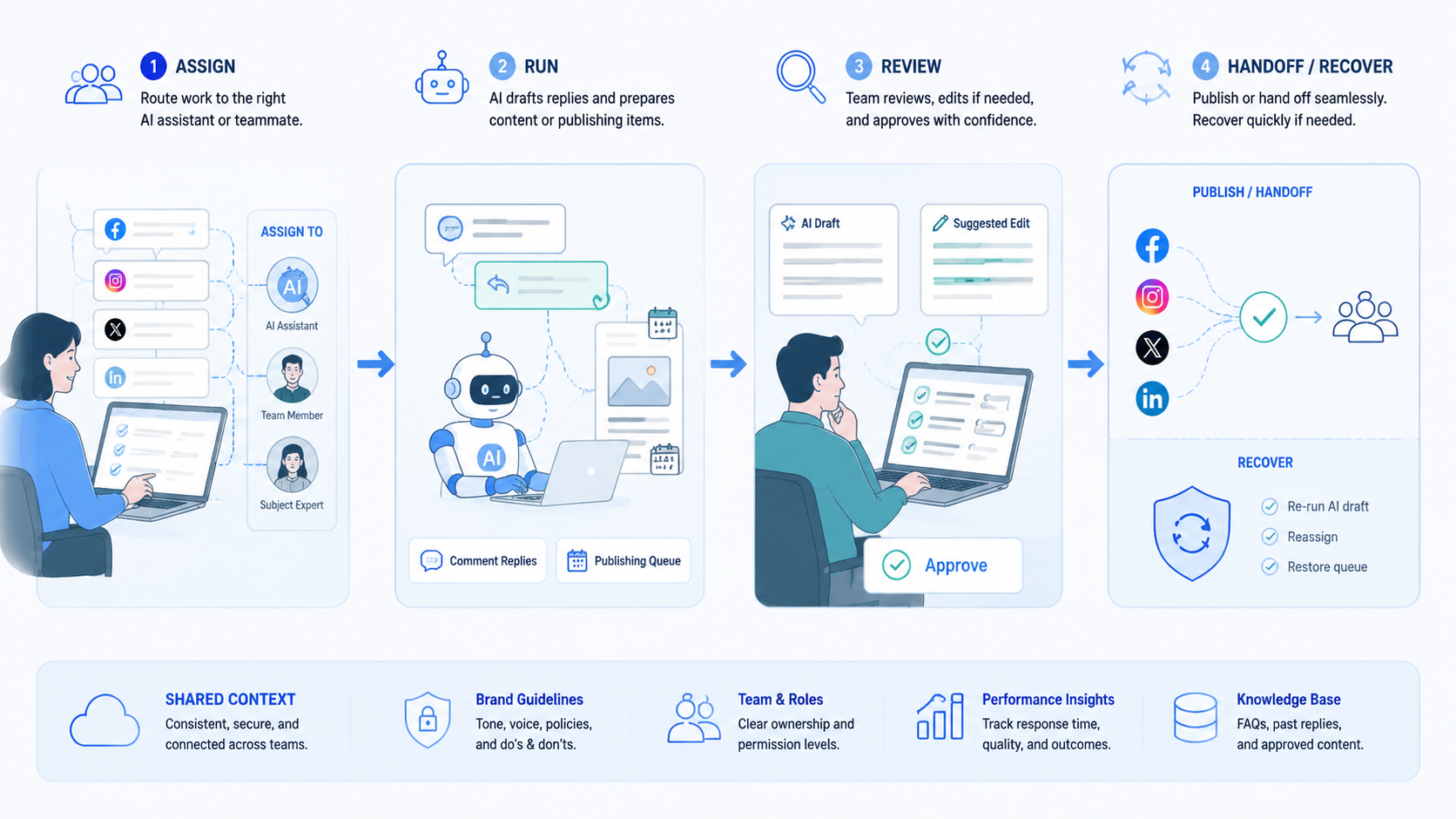
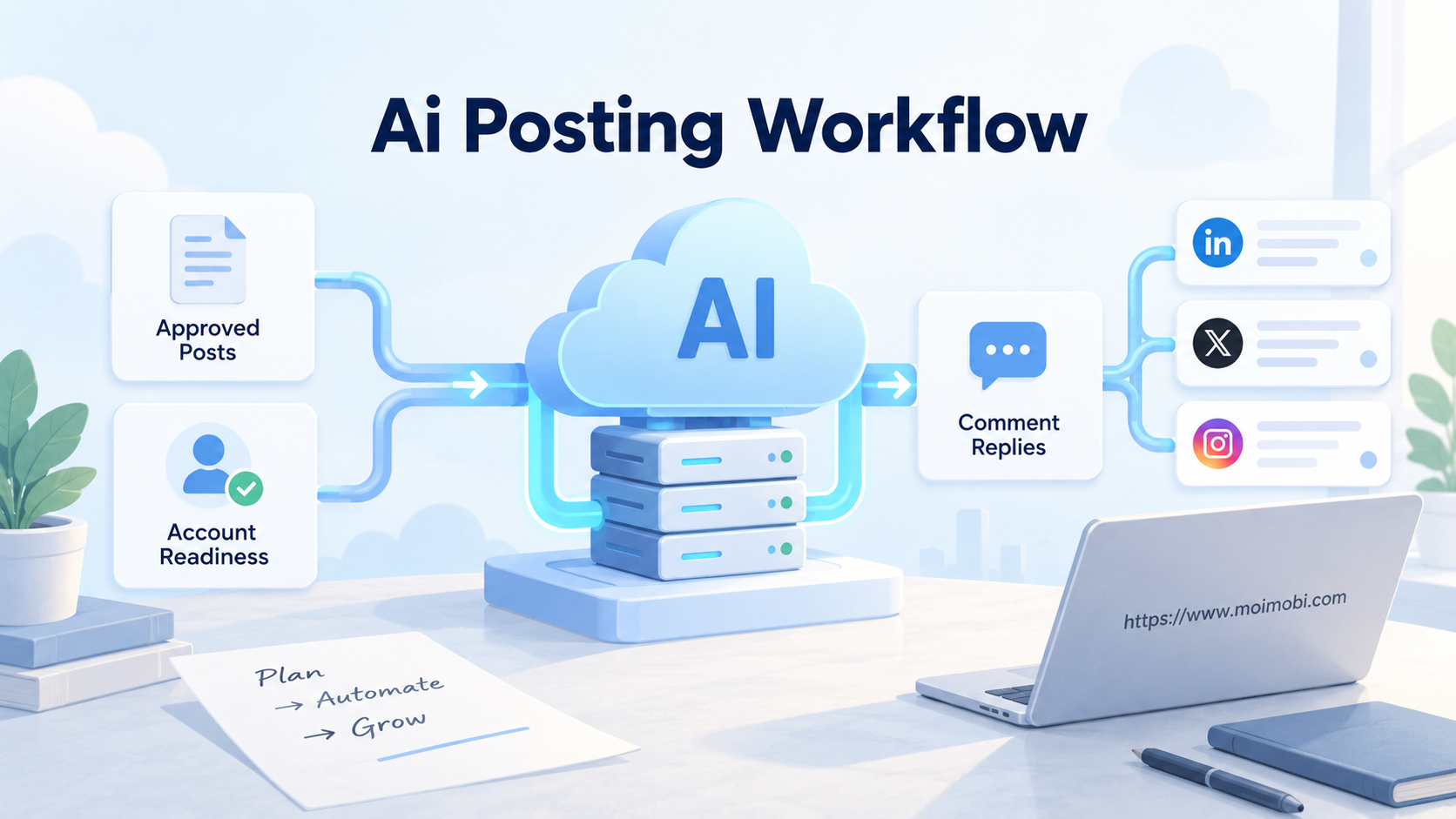
An AI social media assistant is a system that helps teams handle repeated comment replies, publishing steps, and review handoffs with more structure. It is not only a caption generator or chatbot. A workable setup also defines which account lane owns the task, when a human reviews the output, and how a paused run restarts.
This matters because social media teams rarely do one isolated action. They prepare posts, route approval, watch comments, answer common questions, and track response windows at the same time. Once several operators touch the same account pool, the problem becomes workflow control more than content creation.
That is where MoiMobi fits as execution infrastructure. The useful question is not whether AI can write a reply. The useful question is whether an AI social media assistant can help a team publish and answer at scale without mixing lanes or confusing ownership.
Official platform guidance supports this operational framing. Instagram for Business, Meta Business Help Center, and TikTok Support all document business-side publishing and account workflows rather than one-click growth shortcuts.1 2 3 Browser execution guidance from W3C WebDriver and Playwright also reinforces the importance of controlled sessions and repeatable task handling.4 5
The Core Idea Behind AI Social Media Assistant for Comment Replies and Publishing
The most common misunderstanding is that an AI social media assistant should replace the whole social media manager. That is not the useful model.
The practical model is a workflow assistant. It supports a team that already has accounts, content lanes, and review rules. It can prepare copy, draft reply options, queue the next publishing action, and keep routine work moving through a consistent path.
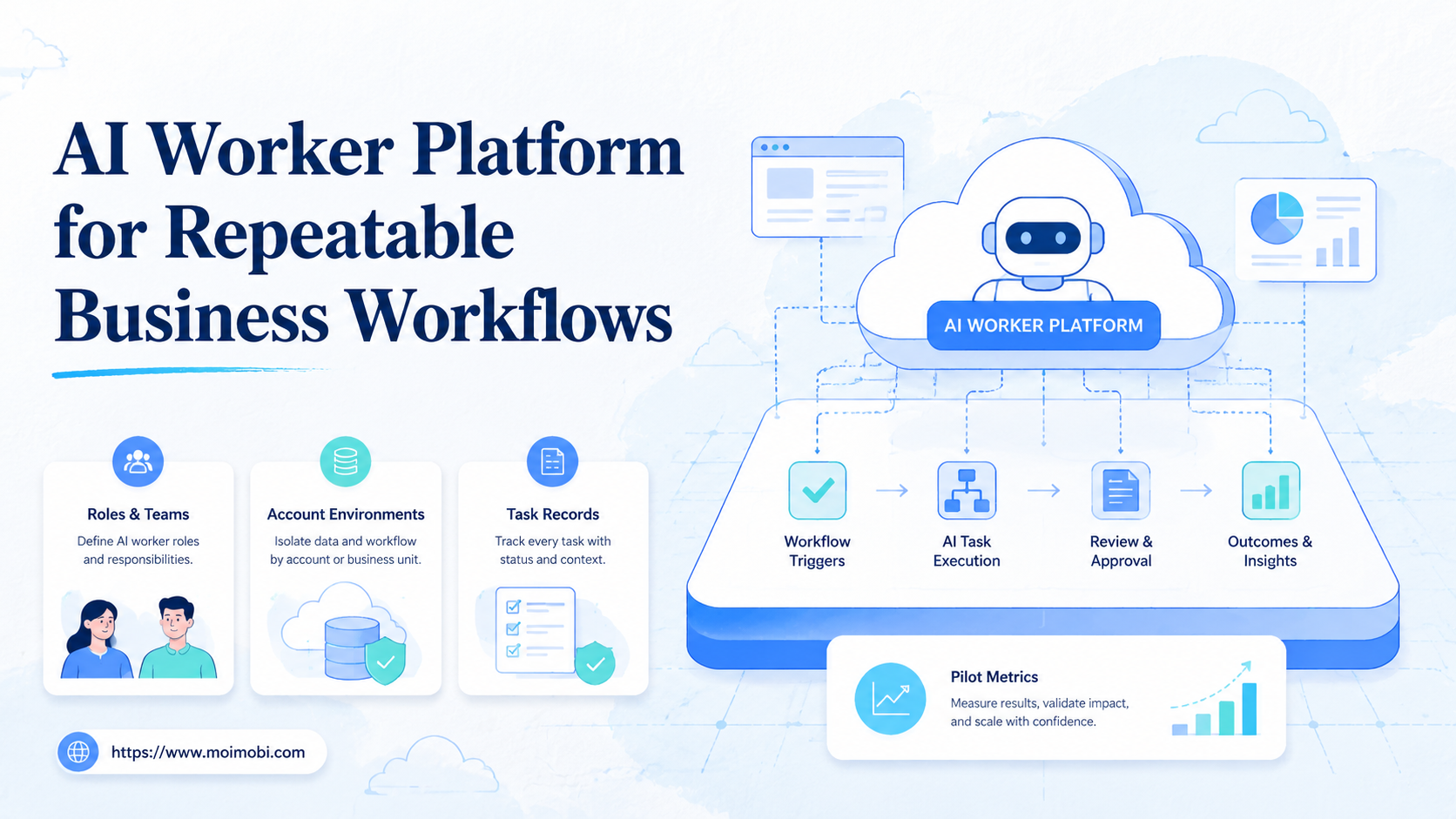
That means the assistant usually sits inside a broader operating stack:
| Layer | What it handles | Why it matters |
|---|---|---|
| Content layer | Draft captions, short replies, and publishing notes | Reduces repetitive writing work |
| Queue layer | What is waiting, approved, or blocked | Keeps work visible |
| Account lane | Which profile or client owns the task | Prevents mixed context |
| Review layer | Who must approve the next action | Protects public output |
| Recovery layer | How a paused run resumes | Reduces rescue work |
So the assistant is less like a magic autopilot and more like a structured operator aid. It writes faster, but its deeper value is that it makes routine work easier to assign, inspect, and continue.
Why Teams Search for This Topic
Teams usually search for this topic when reply volume and publishing volume start competing for the same attention. A small team can often survive that tension for a while. A multi-account team usually cannot.
One trigger is inbox pressure. Comments and simple customer questions arrive all day, but the same operators still need to review scheduled posts and asset changes.
Another trigger is lane confusion. Agencies, creators, and brand teams often run several account groups at once. If publishing and reply work happen in one shared queue, people lose track of who owns the next action.
Consider one social team handling TikTok comments, Instagram post approval, and client publishing windows in the same shift. If replies, drafts, and approvals all depend on one pooled workflow, speed may look fine at first. The hidden cost appears later when a blocked reply, late approval, or missed queue item has no clear owner.
Who Benefits Most and In What Situations
This model fits teams with repeatable social media work, especially when the same group handles both publishing and audience interaction. It is much weaker for one-off content teams that only post occasionally.
The strongest fit usually looks like this:
Strong fit
- Agencies managing many client profiles.
- Creator teams handling both release and community work.
- Brands with recurring campaign calendars and high reply volume.
- Teams that need review checkpoints before public posting or reply send.
Weak fit
- Single-account teams with very low audience activity.
- Workflows with no stable publishing or reply pattern.
- Teams that still operate from personal tabs and informal chat handoff.
- Projects where no reviewer owns quality control.
The important distinction is not company size. It is repeatability. A small team with five active profiles and daily comment load may need an assistant sooner than a larger team with one calm account.
How to Evaluate or Start Using AI Social Media Assistant for Comment Replies and Publishing
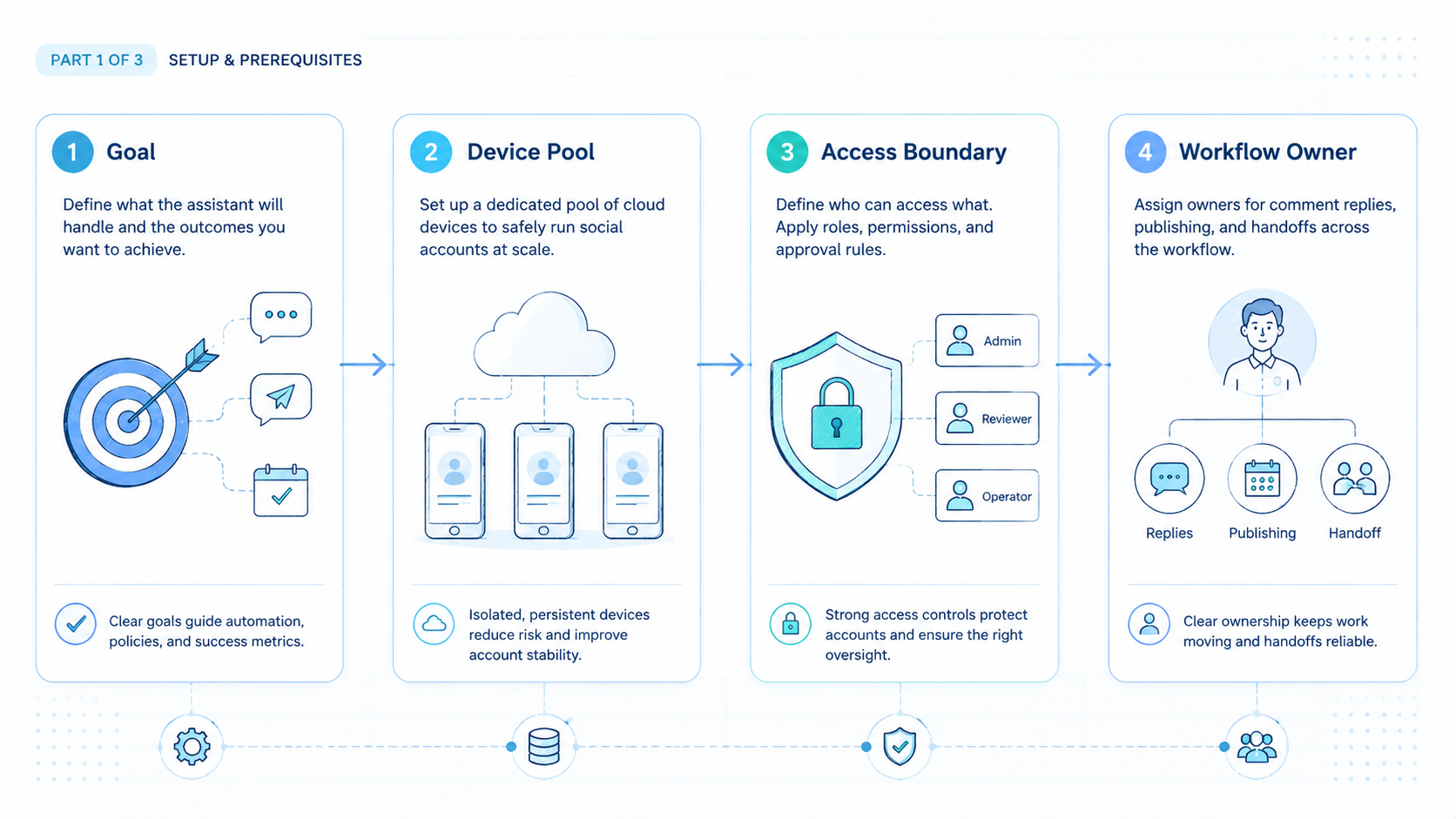
Start small and separate the two job families. Publishing and comment work belong together strategically, but they usually need different timing rules.
Use this rollout path:
- Pick one account cluster and one content queue.
- Define which reply categories the assistant may draft and which still need manual handling.
- Set one review checkpoint for publishing and one for replies.
- Keep the lane record visible so another operator can continue it later.
- Expand only after the first account cluster survives a blocked case without private rescue notes.
A short pass or fail check helps:
| Check | Pass | Fail |
|---|---|---|
| Reply scope | The assistant handles defined categories only | It drafts everything without boundaries |
| Publishing scope | The queue shows approved, blocked, and scheduled states | Posting status lives in chat only |
| Lane ownership | One account lane owns the task | Several accounts share one unclear queue |
| Recovery path | Paused work restarts with context | Retries begin from guesswork |
If the workflow needs real execution support, multi-account management, social media marketing, and mobile automation are natural next pages.
Mistakes That Reduce Results
The first mistake is using the assistant as a generic reply engine with no category boundaries. That usually creates more review work, not less.
The second mistake is merging publishing approval and comment handling into one pooled lane. These jobs affect the same account, but they usually move at different speeds and require different reviewers.
The third mistake is hiding workflow state in private chat. If another operator cannot tell which reply queue is blocked or which post is waiting for approval, the assistant is adding output but not control.
What not to do
- Do not let the assistant answer every comment type by default.
- Do not route unrelated accounts through one combined publishing and reply queue.
- Do not treat draft volume as proof that the workflow is healthy.
- Do not expand before a second reviewer can continue the same lane cleanly.
One common failure mode appears when the team uses AI to draft replies quickly but never records why a reply was held, edited, or delayed. The queue looks active, yet the next operator still has to reconstruct the decision trail manually.
Operational Signals That Show the Setup Is Working
A useful assistant creates signals a lead can verify without long explanation. If the workflow still depends on memory, the setup is not mature enough yet.
Use a quick operating review:
- Reply queue clarity: open, approved, and blocked replies are visible.
- Publishing lane clarity: draft, review, and release states are easy to inspect.
- Ownership clarity: one person or squad owns the next action.
- Recovery clarity: paused runs reopen in the same account lane.
These signals matter because social teams usually fail on coordination before they fail on writing quality. The assistant may draft good content, but the operation still breaks if nobody can tell what should happen next.
Another useful signal is category drift. If the assistant starts handling reply types that were supposed to stay manual, the team should treat that as a boundary failure rather than as a productivity win. Tight scope usually creates better consistency than loose expansion.
Pilot Rollout, Measurement, and Recovery Checks
The pilot should prove that the assistant reduces repetitive work without creating hidden cleanup work elsewhere.
Track the first rollout with a scorecard:
| Signal | Healthy sign | Failure sign |
|---|---|---|
| Reply turnaround | Routine replies move faster with stable review | Drafts pile up waiting for context |
| Publishing visibility | Approved and blocked items are obvious | Status has to be explained manually |
| Lane transfer | A second operator can continue the queue | Only the original operator understands the state |
| Exception rate | Blocked cases are narrow and explainable | Exceptions spread across many tasks |
A useful weekly review is exception analysis. Look at the replies that required manual rewrite and the posts that missed queue timing. Those cases usually reveal whether the assistant needs tighter category rules, cleaner review gates, or better task routing.
Frequently Asked Questions
Is an AI social media assistant the same as a chatbot?
No. A chatbot is only one possible component. An assistant also supports publishing, queue routing, and review flow.
Should teams automate replies before publishing?
Usually no. It is safer to define both lanes together, then start with the simpler category first.
What reply types should stay manual?
Escalations, policy questions, and sensitive brand issues usually need tighter human review.
Does this fit agencies?
Yes, especially when the same team handles client publishing and comment management.
What is the first warning sign?
The team produces many drafts but still cannot explain which account lane owns the next step.
Can this work across Instagram and TikTok?
Yes, if each platform and account cluster still has clear workflow boundaries.
What should a pilot measure?
Reply turnaround, publishing visibility, transfer quality, and exception rate.
When should teams stop expansion?
Pause when blocked cases create more rescue work than the assistant is removing.
Conclusion
An AI social media assistant for comment replies and publishing works best as a workflow layer, not as a standalone writing trick.
Check these points before you scale:
- one clear account lane
- one defined reply scope
- one visible publishing queue
- one restart path another operator can follow
If those checks hold, the assistant is probably helping the team operate more cleanly rather than only producing more text.
Sources