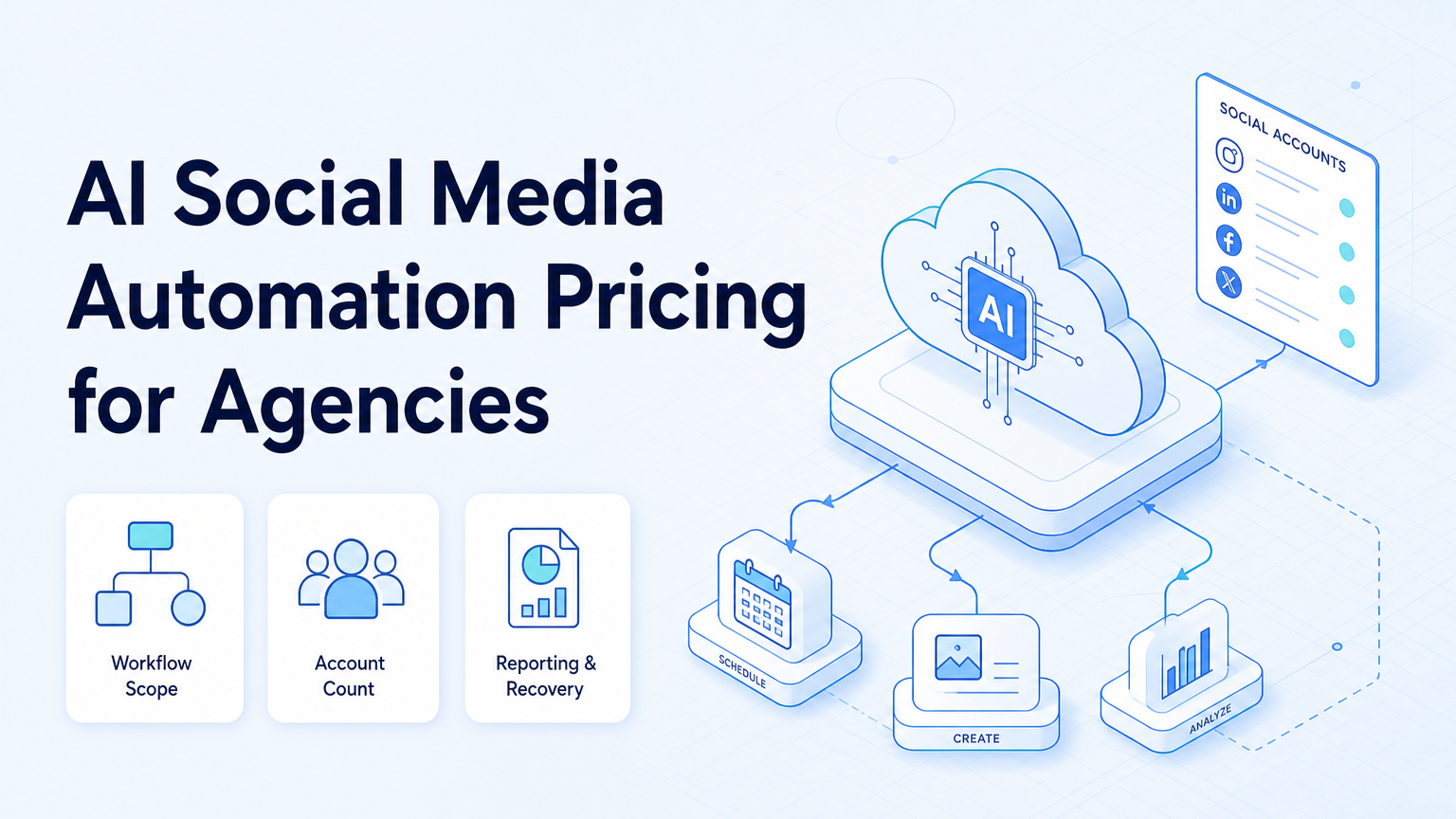
AI social media automation pricing means the full cost of using AI and execution tools to deliver social workflows for agency clients. The price is not only a monthly subscription. It also includes account environments, mobile execution, review time, usage limits, team roles, and failed-task recovery.
Agencies search for pricing because their costs scale differently from a single brand. One client may need only content planning. Another may need TikTok publishing, Instagram checks, comment triage, and weekly reporting across many accounts.
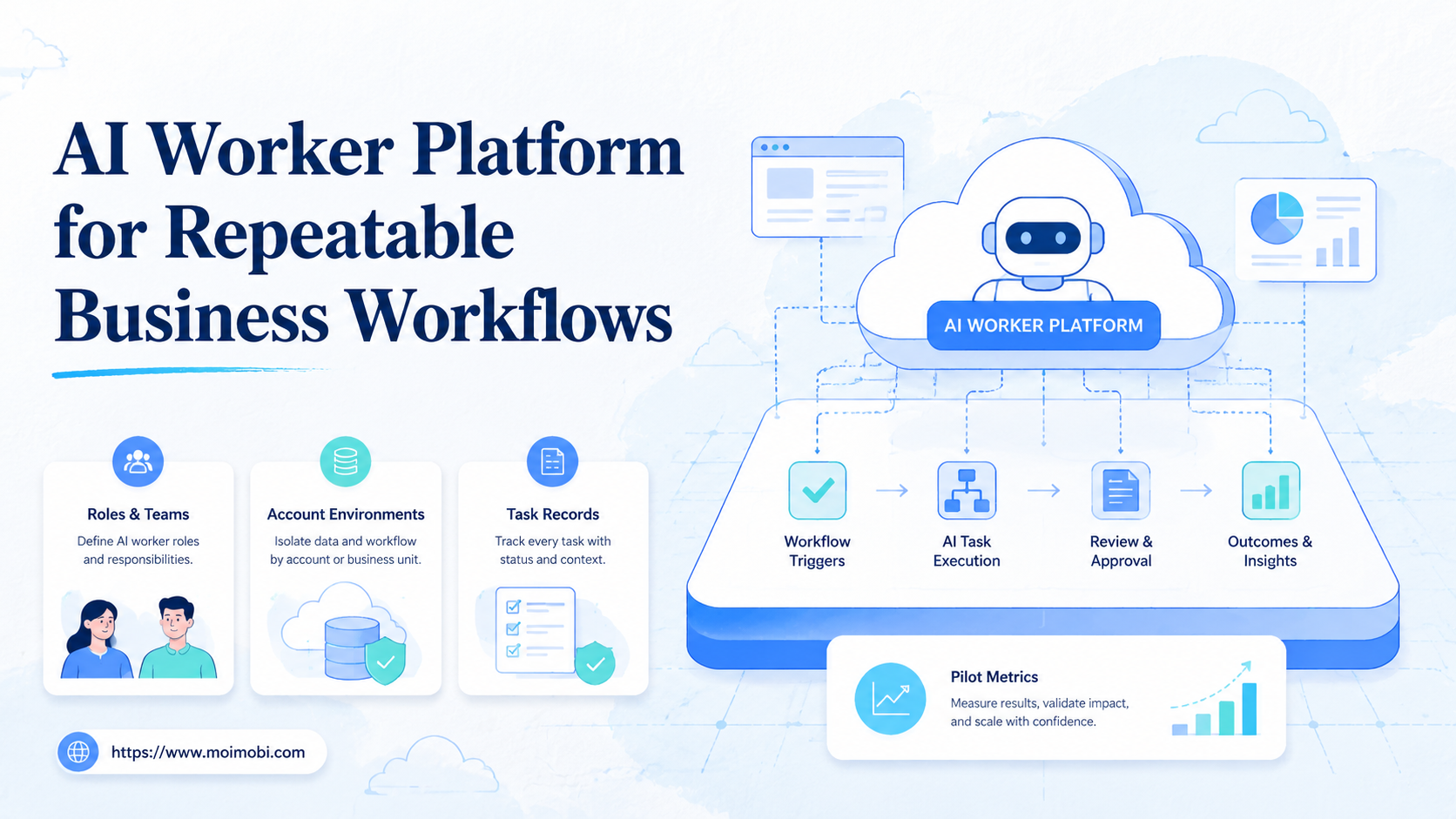
Moimobi frames pricing around execution infrastructure. Agencies can use social media marketing, multi-account management, cloud phones, browser profiles, and automation workflows as parts of the same cost model.
Key Takeaways
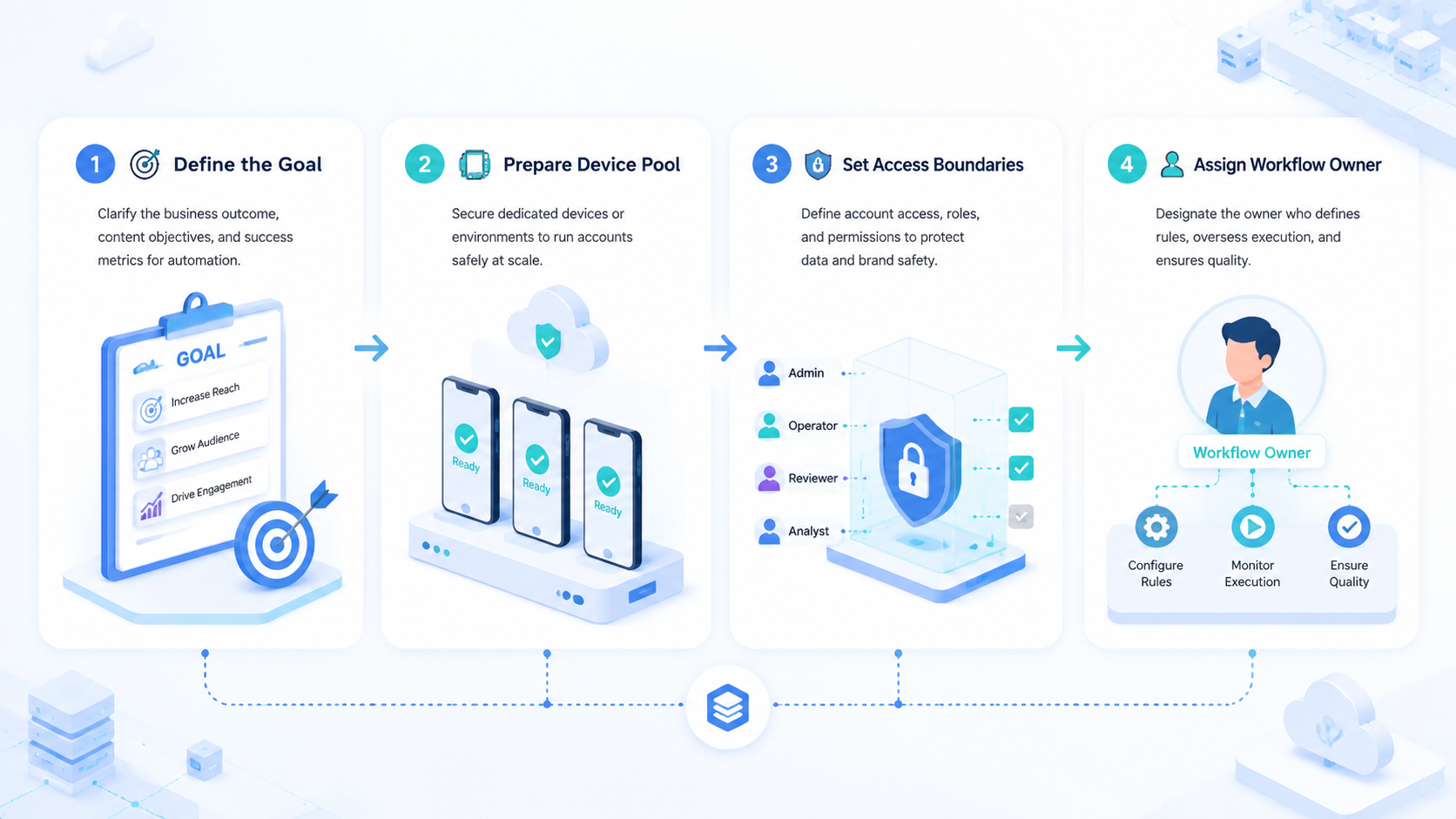
- Pricing should be evaluated by workflow scope, not only seat count.
- Agencies must count account environments, review steps, and mobile execution.
- AI generation costs are only one part of the system.
- Reporting and recovery can reduce hidden labor cost.
- A pilot should measure cost per successful workflow.
- Moimobi fits agencies that need execution environments, not only AI copywriting.
The Core Idea Behind AI Social Media Automation Pricing
The common mistake is treating AI social media automation pricing as a simple software bill. Agencies should price the workflow outcome instead.
A useful pricing review starts with four questions. How many client accounts need work? Which tasks are automated? Which tasks still need review? Which execution environments are required?
For example, an agency running TikTok posting automation may need AI captions, mobile execution, account isolation, post-status checks, and client reporting. Another agency may only need caption drafts and a content calendar. Those two buyers should not compare tools only by the headline price.
Official platform boundaries matter too. TikTok documents a Content Posting API for approved integrations, and Meta documents the Instagram Platform for supported business and creator workflows. A tool's pricing should be evaluated against the actions it can actually support.
Pricing Drivers Agencies Should Count
Agency pricing becomes clearer when the cost is broken into operating drivers.
| Pricing driver | Why it matters | What to ask |
|---|---|---|
| Account count | More clients create more environments and review work | Is pricing by account, seat, workspace, or usage? |
| Task type | Publishing, replies, and monitoring have different effort | Which workflows are included? |
| AI usage | Captions and replies may consume model calls | Are usage limits clear? |
| Mobile execution | App-first tasks may need cloud phones | Are device environments included? |
| Browser profiles | Dashboard work needs session separation | Are profiles persistent? |
| Reporting | Agencies need client-ready outputs | Can results be exported or audited? |
| Recovery | Failed tasks create hidden labor | Are error reasons and owners visible? |
This table prevents a narrow comparison. A cheap AI writing tool may look attractive, but it may not include the execution layer. A more complete platform may cost more while reducing manual account handling.
What AI social media automation pricing should include
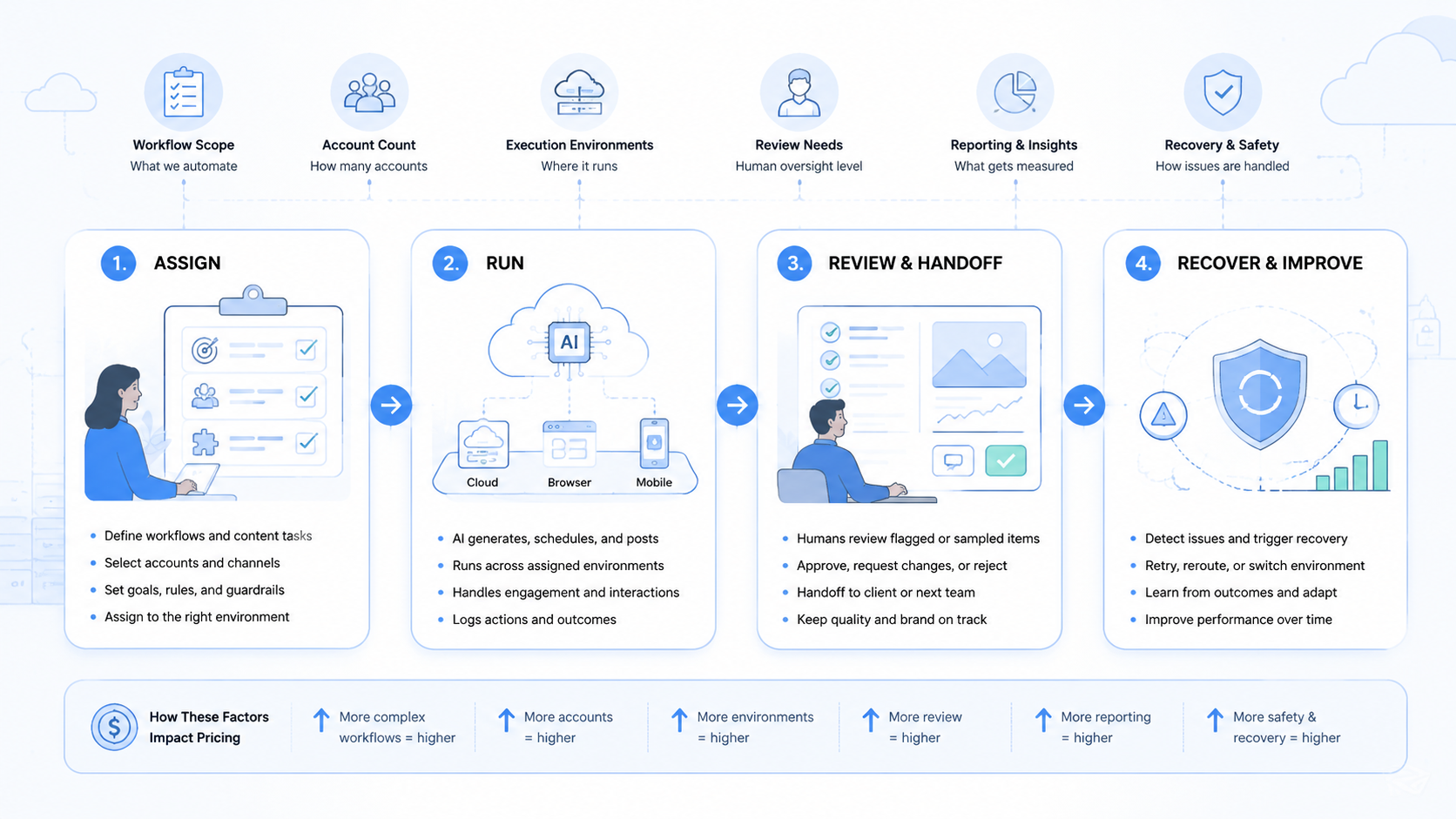
AI social media automation pricing should include five cost layers. The first is content generation. This covers captions, post ideas, reply drafts, and campaign outlines. It is usually the easiest layer to understand.
The second layer is execution. Agencies need to know whether the tool can run browser tasks, mobile tasks, or both. A tool that creates captions but cannot support account operations may still leave most of the work manual.
The third layer is environment capacity. Client accounts may need browser profiles, cloud phones, or separated workspaces. This layer matters when account count grows.
The fourth layer is team control. Agencies should check whether reviewers, operators, and account owners can work in defined roles. Without roles, approval and recovery work often moves back into chat.
The fifth layer is reporting. Client-ready reporting has value because it saves account managers time. Pricing should be judged against that saved work, not only against the tool bill.
Why Teams Search for This Topic
Agencies search for AI social media automation pricing when manual work starts to affect margin. The issue often appears after the first few clients. Work still gets done, but operators spend too much time switching accounts, checking status, and preparing reports.
Pricing questions also appear when clients expect faster output. AI can draft captions and ideas, but the agency still needs execution. Posts must move through accounts, environments, reviewers, and reports.
The W3C WebDriver standard defines browser automation concepts, while Playwright documents browser contexts for isolated sessions. Those sources support an operational point: logged-in web work needs state control when many accounts are involved.
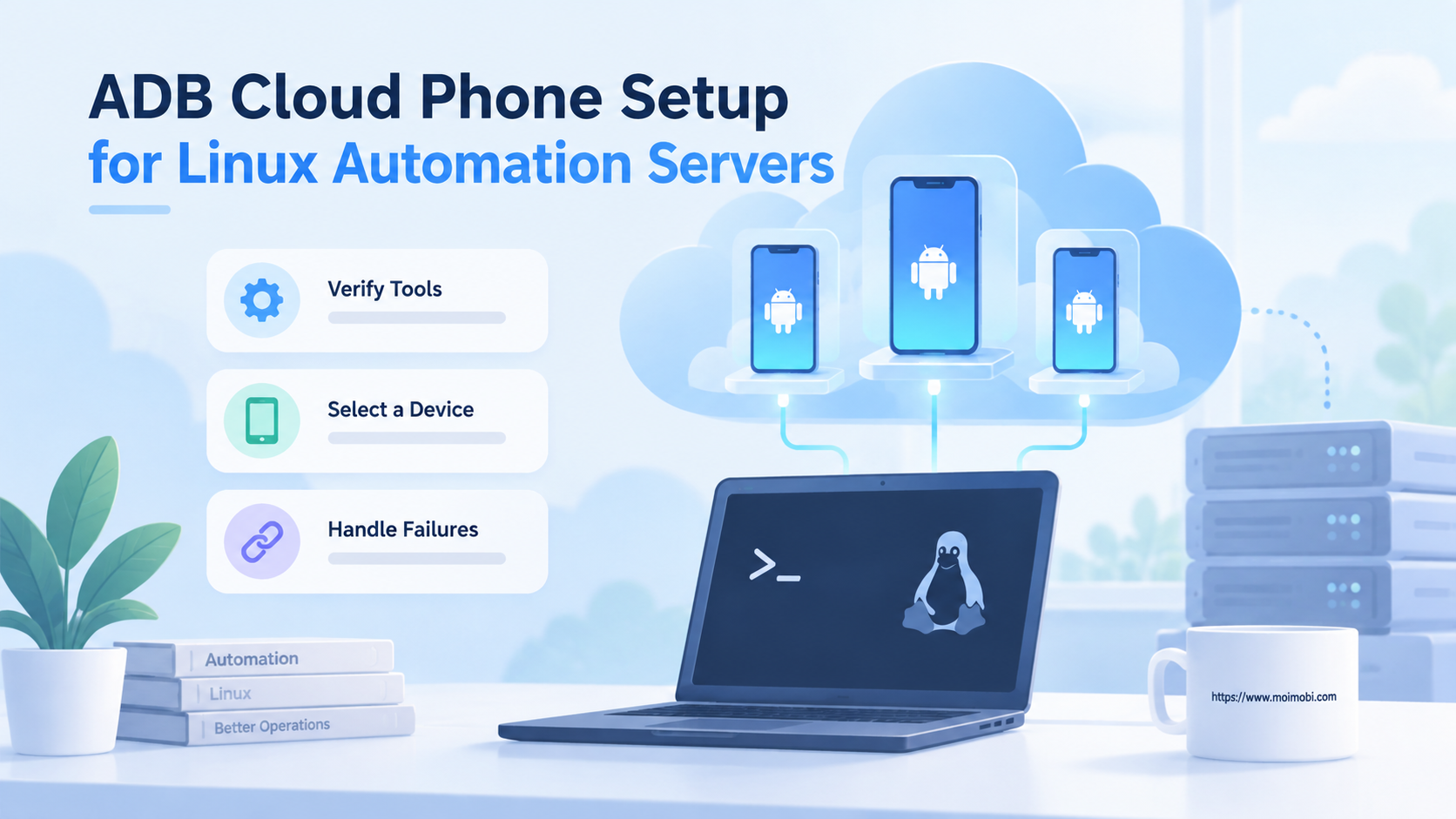
Mobile work adds another cost layer. AWS Device Farm shows how remote mobile environments are used for app testing. For agencies, managed mobile environments can become part of the execution cost when workflows rely on TikTok or Instagram apps.
Who Benefits Most and In What Situations
AI social media automation pricing matters most for agencies with repeatable workflows. These teams can compare cost against measurable operating gains.
A strong fit includes agencies that manage multiple client accounts, publish content across TikTok and Instagram, review comments, and produce client reports. These teams need more than text generation. They need separated workspaces and execution records.
A weaker fit is a small agency that only drafts monthly content ideas. In that case, a lighter AI writing tool may be enough. Paying for mobile execution before the workflow needs it can create unnecessary cost.
Moimobi is relevant when account operations are part of the paid service. If the agency sells publishing, monitoring, reply handling, or campaign execution, the pricing discussion should include mobile automation, cloud phones, browser profiles, and device isolation.
Pricing also depends on client mix. A client with one Instagram account and monthly posting needs a lighter model. A client with TikTok, Instagram, WhatsApp, and customer replies needs more execution capacity. The agency should not price both projects as if they require the same system.
The best internal rule is to price by operational load. Count the accounts, tasks, review points, reporting needs, and recovery steps. Then compare platforms by how much of that load they actually handle.
How to Evaluate AI Social Media Automation Pricing for Agencies
Use a pilot budget instead of guessing from a pricing page.
-
Pick one client workflow.
Choose a common task, such as TikTok publishing plus Instagram status checks. -
Count required accounts.
Include test accounts, client accounts, regional accounts, and reporting accounts. -
Define the execution path.
Decide what runs in a browser, what runs in a mobile environment, and what remains manual. -
Estimate review work.
Captions, comments, DMs, and client-facing reports need different review rules. -
Track cost per completed workflow.
Divide total pilot cost by successful client-ready outcomes. -
Compare hidden labor.
Include manual fixes, failed tasks, and operator handoff time.
This method is more useful than asking for one universal price. Agencies have different account counts, service scopes, and review standards.
Mistakes That Reduce Results
The first mistake is buying only for AI content generation. Content is one part of the workflow. Agencies also need execution, review, reporting, and recovery.
The second mistake is ignoring failed tasks. A tool can look affordable until operators spend hours fixing missing assets, login issues, or unclear approvals. Failed work has a cost even when it is not shown on the invoice.
Another mistake is comparing cloud phones with browser tools as if they solve the same job. Browser profiles support web dashboards and logged-in sessions. Cloud phones support app-first mobile work. Agencies often need both.
Avoid pricing models that hide usage limits. Ask what happens when account count, task count, image generation, AI calls, or mobile execution increases. Clear limits make agency margins easier to protect.
Another mistake is ignoring onboarding work. A platform may be powerful, but the first month still requires account mapping, environment setup, workflow design, and team training. Agencies should include this one-time cost in the buying decision.
Do not treat every task as equal either. Publishing an approved post is different from replying to a customer complaint. A pricing model should reflect review effort and risk level, not only the number of actions.
Pilot Rollout, Measurement, and Recovery Checks
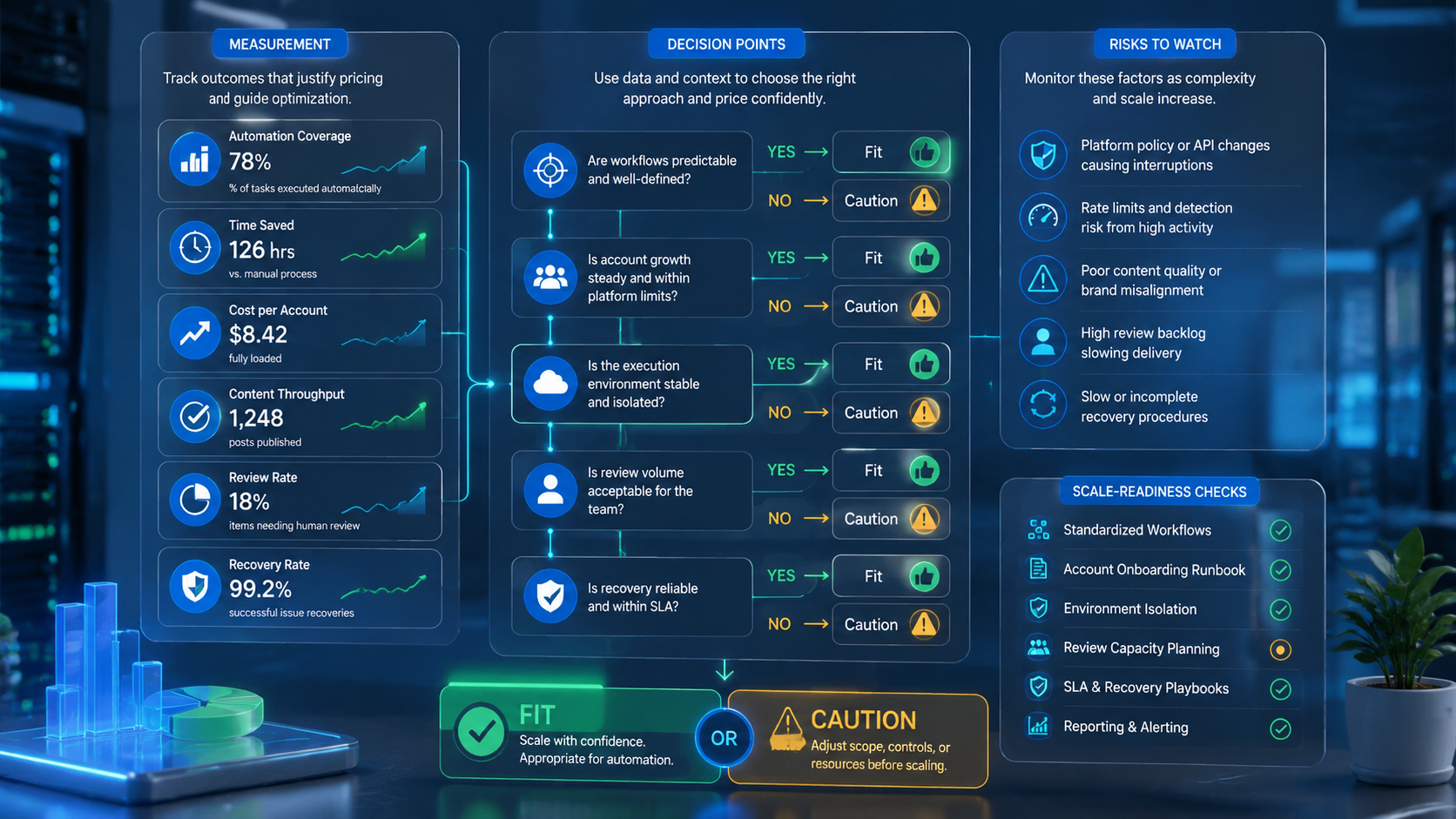
A pricing pilot should measure cost and control together. Choose one client, one campaign, and one set of accounts. Run the same workflow for a defined period.
Track these numbers:
- Tool cost during the pilot.
- Accounts and environments used.
- Successful workflow count.
- Failed task count.
- Manual correction time.
- Reviewer time.
- Client-ready reports produced.
Then calculate cost per useful outcome. A useful outcome might be an approved post published, a monitored account report delivered, or a reply queue reviewed. The metric should match what the client pays for.
Recovery data is part of pricing. A platform that shows failure reasons can reduce hidden labor. A tool that hides failures may push work back into chat messages and manual checking.
Add a decision gate at the end of the pilot. Continue only if the agency can show three things: the workflow was completed, the reporting was usable, and failures were explainable. If one of those is missing, refine the workflow before buying more capacity.
Moimobi is best evaluated through that type of pilot. Agencies can test whether AI support, account workspaces, and execution environments reduce the actual labor behind a paid client service.
Keep the first paid rollout close to the pilot. Add more accounts only after the team knows the true cost of one finished workflow.
Frequently Asked Questions
What affects AI social media automation pricing most?
Account count, workflow scope, AI usage, mobile environments, team roles, and reporting needs usually drive cost.
Is AI caption generation enough for agencies?
Not if the agency also sells publishing, monitoring, replies, or account operations.
Should agencies pay for cloud phones?
Only when mobile execution is part of the workflow. App-first TikTok or Instagram tasks may need them.
How should agencies compare pricing?
Compare cost per completed workflow, not only monthly subscription price.
Do browser profiles affect pricing?
Yes. Persistent browser profiles may be needed for dashboard work and account separation.
What should a pilot measure?
Measure successful outcomes, manual corrections, reviewer time, failed reasons, and reporting quality.
How does Moimobi fit pricing decisions?
Moimobi fits when agencies need AI support plus real browser and mobile execution environments.
Conclusion
AI social media automation pricing for agencies should be tied to service delivery. The right question is not only "how much does the tool cost?" It is "what does it cost to complete one client workflow cleanly?"
Before choosing a platform, map account count, task type, AI usage, execution environments, review time, and recovery needs. If the agency needs both AI assistance and real execution environments, Moimobi can help turn that pricing review into a practical pilot.