Key Takeaways
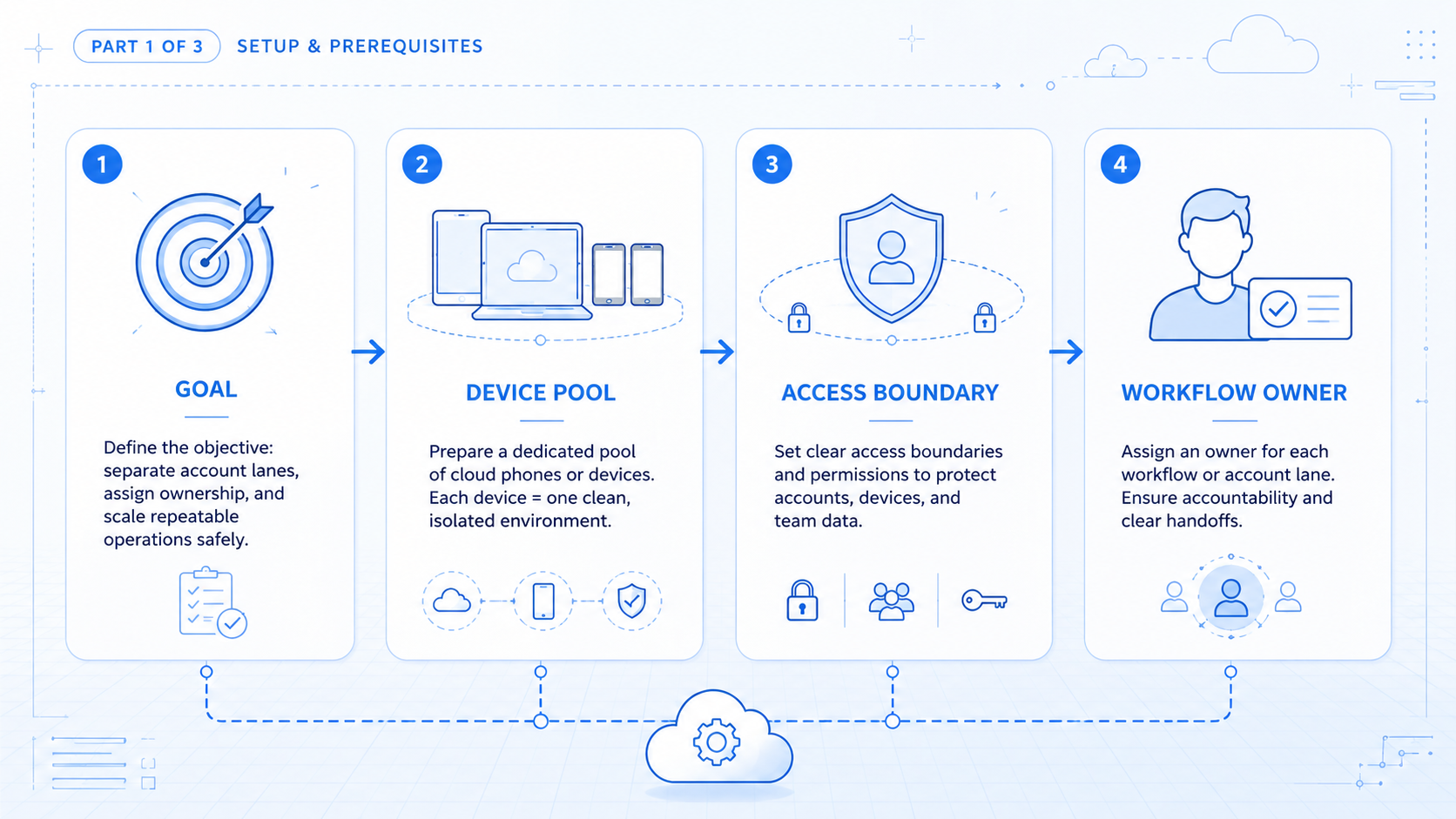
- Social media matrix management is a team operating model for many accounts, not only a dashboard view.
- TikTok and Instagram teams need lane ownership, environment separation, and clear handoff rules.
- The real challenge is operational control, not only posting volume.
- A pilot should test account clarity, reviewer transfer, and blocked-case handling before expansion.
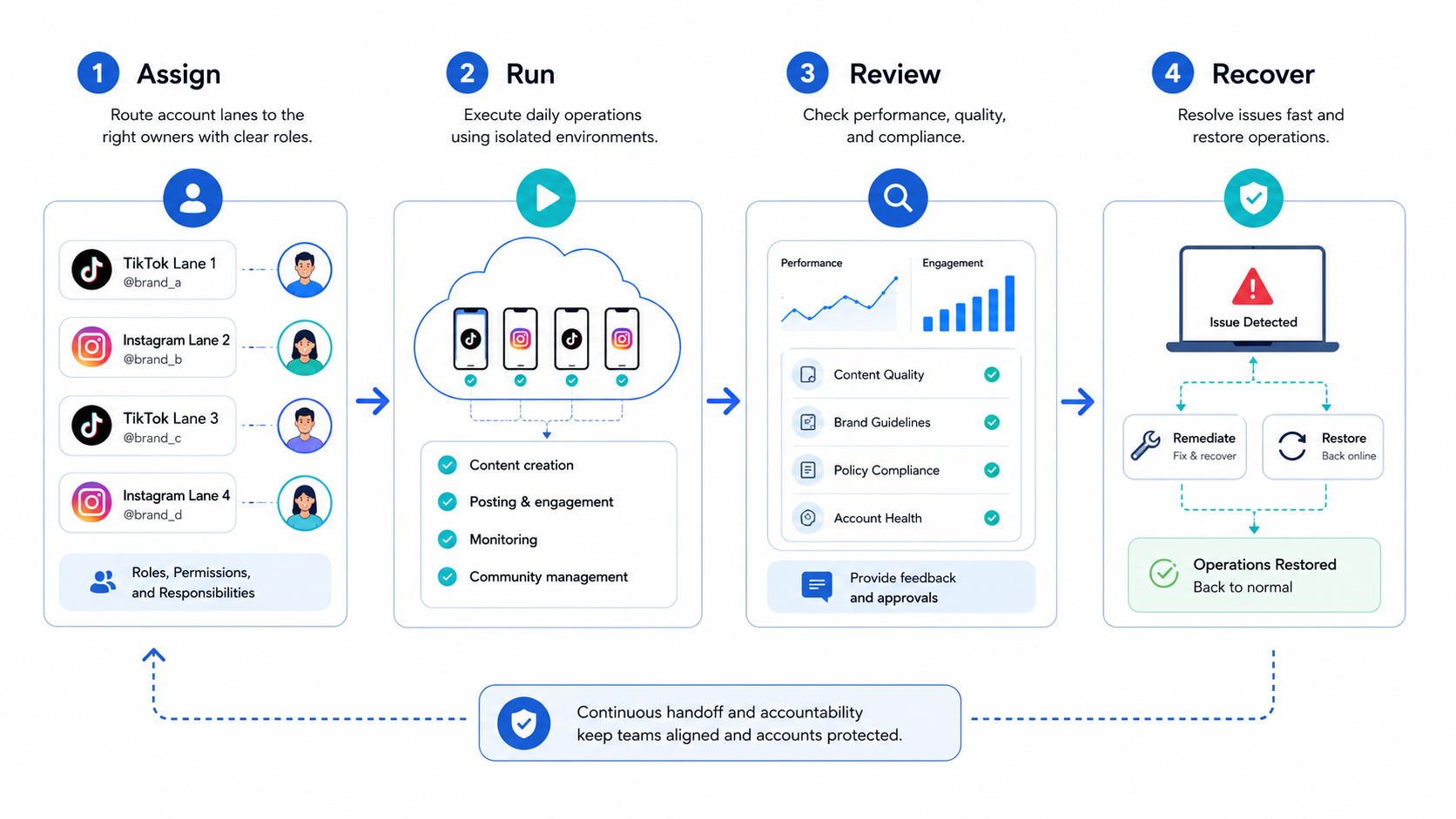
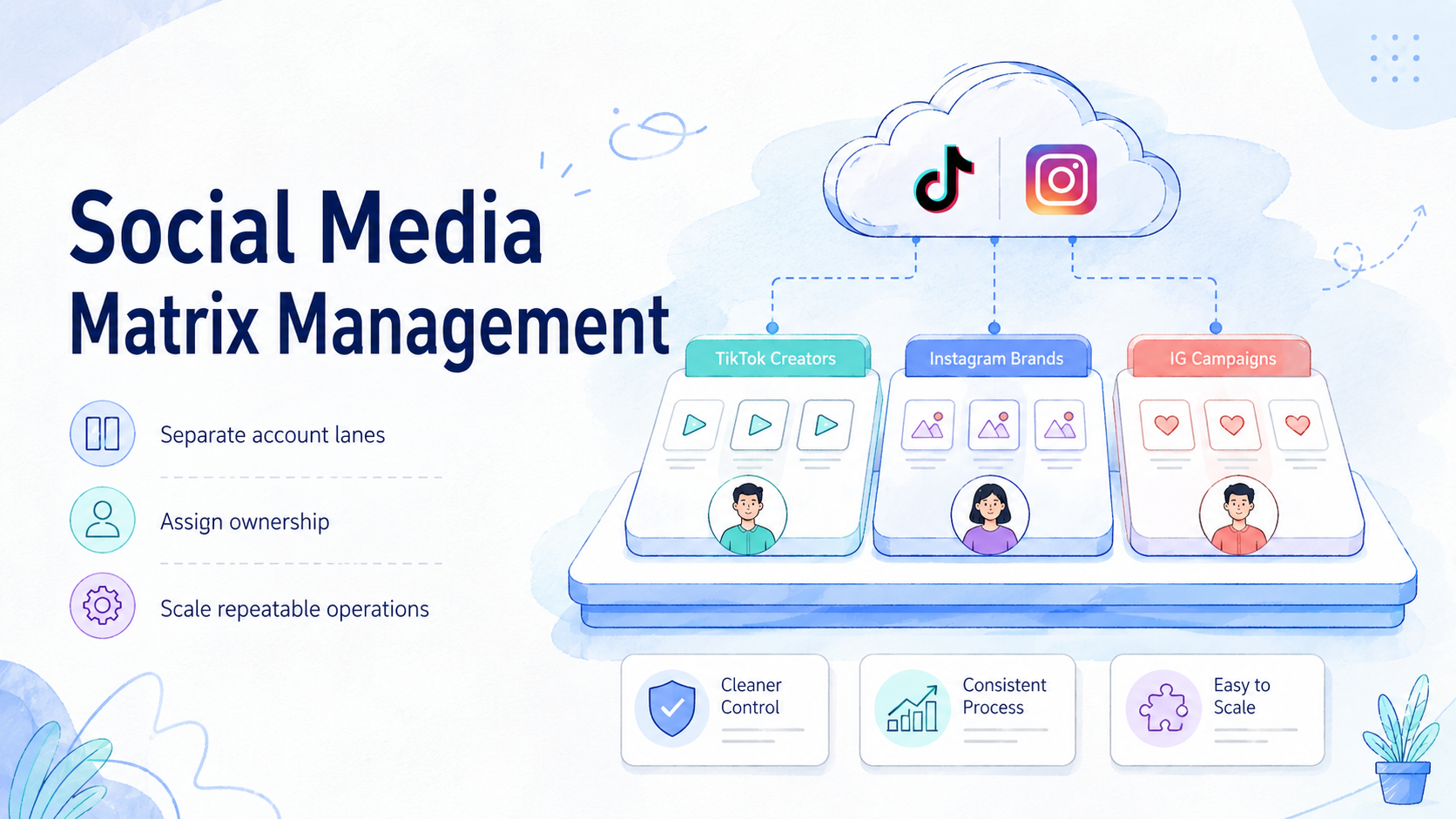
Social media matrix management is a system for organizing many TikTok and Instagram accounts into clear account lanes, owner roles, execution environments, and repeatable workflows. It is not only a way to see many accounts on one screen. A useful matrix setup also defines who owns each lane, how actions are reviewed, and how a team handles blocked or transferred accounts.
This matters because a matrix usually fails before the team notices a tool limit. The first problems are mixed ownership, unclear account status, and inconsistent routing between operators. Once those issues spread across several accounts, even a strong content pipeline becomes harder to scale.
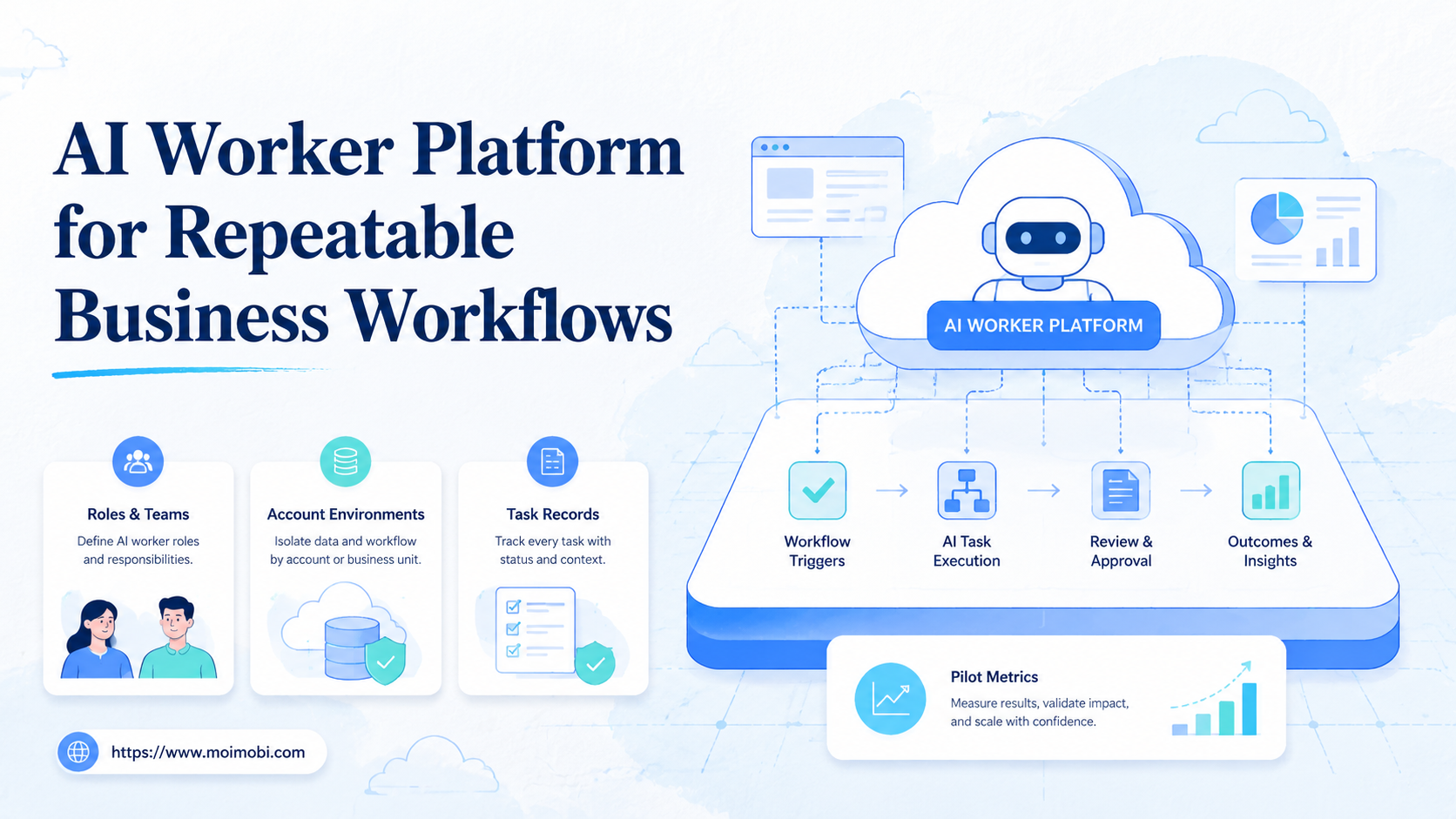
That is why teams often evaluate MoiMobi as execution infrastructure rather than a simple posting tool. The practical question is not "how many accounts can the tool open?" The practical question is "can the team run social media matrix management without losing account context, workflow ownership, or review clarity?"
Meta Business Help, Instagram for Business, and TikTok Support all reflect account-side workflow management rather than one-click growth shortcuts.1 2 3 Playwright and W3C WebDriver also center explicit session handling, which is directly relevant when matrix work depends on separate browser lanes.4 5
The Core Idea Behind Social Media Matrix Management for TikTok and Instagram Teams
The most common misunderstanding is that a matrix is only a larger version of one social account. That is not how the work behaves in practice.
A matrix becomes a separate operating model because each account may differ in region, audience, content cadence, approval path, or execution surface. A brand lane may be reviewed centrally and posted from a browser workflow. A creator lane may need mobile execution. A support-heavy lane may prioritize comments and inbox work over publishing.
The core idea is simple: separate the work before you automate more of it.
| Layer | What it controls | Why it matters |
|---|---|---|
| Account lane | Which accounts belong together | Prevents random pooling |
| Environment lane | Where the actions run | Protects account context |
| Role lane | Who approves, posts, or reviews | Clarifies ownership |
| Workflow lane | What happens next | Makes handoff predictable |
That is why multi-account management, device isolation, and social media marketing belong in the same path.
Why Teams Search for This Topic
Teams usually search for this topic after matrix work starts feeling chaotic. The content may still publish on time, but the operating system underneath it is getting weaker.
The usual search triggers are:
- Account growth: the number of active TikTok and Instagram accounts rises faster than manual coordination can handle.
- Team growth: more operators start touching the same account pool.
- Workflow growth: publishing, comment handling, and support begin sharing the same account set.
At that point, the problem is not only posting. Teams need to know which account belongs to which lane, who owns the next step, and which environment is supposed to execute the action. If those answers live only in chat, the matrix is already fragile.
Who Benefits Most and In What Situations
This model fits teams with real account-pool complexity. It is weaker for a single operator with one or two accounts and no handoff problem.
Strong match
- Agencies managing several client account clusters.
- Cross-border teams operating regional TikTok and Instagram lanes.
- Brands with separate creator, campaign, and support workflows.
- Teams that already use reviewers, operators, and lane ownership.
Weak match
- Very small teams with no repeated handoff.
- Setups where all accounts share one environment and one operator.
- Projects with no documented account ownership.
- Buyers looking only for a posting shortcut.
One realistic example is a team that runs product launches, creator content, and customer replies across the same account pool. Without a matrix structure, those workflows compete for access and blur accountability. With a matrix structure, each lane can inherit its own ownership and timing rules.
The same pattern appears in cross-border teams. One country lane may need different publish timing, a different review owner, and a different escalation path from another lane, even when both lanes use the same content system. Matrix management keeps those differences explicit instead of burying them in operator memory.
How to Evaluate or Start Using Social Media Matrix Management for TikTok and Instagram Teams
Start with one matrix slice, not the entire business.
Use these checkpoints:
- Checkpoint 1: account grouping. Define one lane by region, client, creator type, or business unit.
- Checkpoint 2: environment assignment. Decide whether that lane uses browser execution, mobile execution, or both.
- Checkpoint 3: role ownership. Assign who reviews, who executes, and who handles blocked cases.
- Checkpoint 4: status model. Define ready, active, paused, and blocked states.
- Checkpoint 5: handoff record. Make sure another operator can reopen the lane and know the next step.
Pass or fail rules help here:
| Checkpoint | Pass | Fail |
|---|---|---|
| Grouping | Accounts belong to one clear lane | Accounts drift between unrelated campaigns |
| Environment | The team knows where each action runs | Operators guess which surface to use |
| Ownership | The next owner is visible | Tasks bounce in chat |
| Status | Blocked cases are easy to identify | Paused accounts look the same as active ones |
If the matrix relies on mobile-first work, cloud phone, phone farm, and the TikTok operations page are natural next hubs.
Mistakes That Reduce Results
The first mistake is measuring a matrix only by account count. A large account pool with weak routing is not a strong matrix.
The second mistake is sharing one environment across unrelated account lanes. That may look simple early on, but it removes the boundary that makes ownership traceable.
The third mistake is letting every operator use their own lane logic. One person may mark an account ready while another calls the same state blocked. That inconsistency spreads quickly when more workflows depend on the same matrix.
What not to do
- Do not build the matrix around one giant pooled account list.
- Do not treat posting access as the same thing as operational ownership.
- Do not let blocked cases sit without a named reviewer.
- Do not scale to another cluster before the first one survives handoff cleanly.
One common failure case appears when an agency uses the same account board for creator publishing and customer support follow-up. The tooling may still function, but the work no longer has a clear owner or timing rule.
Pilot Rollout, Measurement, and Recovery Checks
The pilot should prove that the matrix becomes easier to understand, not just bigger.
Track the first rollout with this scorecard:
| Check | Healthy sign | Failure sign |
|---|---|---|
| Lane clarity | Every account sits in one stable lane | Accounts move without explanation |
| Owner clarity | Each status has a named owner | Operators ask who should act next |
| Environment integrity | Browser and mobile lanes stay separate | Execution context is mixed |
| Recovery handling | Blocked accounts move into visible review | Paused cases disappear into side chat |
| Transfer quality | A second operator can inherit the lane fast | Handoffs require verbal reconstruction |
Android Enterprise, AWS Device Farm, and BrowserStack all reinforce the operational value of repeatable environments and inspectable device-side work.8 6 7 The same logic helps a social media matrix stay stable under team growth.
A good pilot test is reviewer transfer. Ask a second operator to reopen one lane and explain account state, next actions, and blocked reasons without private context. If that transfer fails, the matrix is still too dependent on memory.
One more useful measurement is change discipline. When a lane owner updates account status, routing rules, or environment assignment, the rest of the team should be able to see that change without asking for a separate explanation. That visibility is often what separates a working matrix from a spreadsheet that happens to list many accounts.
It also helps to track whether one lane can safely pause without confusing the rest of the matrix. If a blocked lane still leaves neighboring lanes understandable and active, the structure is usually strong enough to grow.
That resilience matters because matrix teams rarely scale one lane at a time forever.
Frequently Asked Questions
Is social media matrix management just another word for multi-account management?
Not exactly. Matrix management includes account grouping, role ownership, and workflow handoff, not only access to many accounts.
What should a team structure first?
Start with lane grouping and ownership before trying to automate every action.
Why do TikTok and Instagram teams need separate lanes?
Because different account clusters often need different approval, timing, or execution rules.
Does this fit agencies?
Yes, especially when several client clusters share one operator team.
What is the first sign the matrix is weak?
Operators cannot explain which lane owns the next step.
Can browser and mobile execution both belong to the same matrix?
Yes. The key is to record which lane owns which action.
What should the pilot measure?
Lane clarity, owner clarity, environment integrity, and handoff quality.
When should teams avoid expansion?
Pause when blocked cases and verbal handoffs rise faster than the matrix can document them.
What proves the matrix is ready for another account cluster?
The clearest proof is that a second operator can inherit one lane, explain current status, and execute the next approved action without rebuilding account context first.
Conclusion
Social media matrix management for TikTok and Instagram teams works when the matrix is treated as an operating system rather than a list of accounts.
Before expanding, rank these priorities:
- clear account lanes
- visible ownership
- separated execution environments
- recoverable handoffs
If those four checks hold, the team can scale the next cluster with less operational drift.
Sources